
Indian equity benchmark indices experienced a significant drop in early trade, with the BSE Sensex falling over 525 points and the NSE Nifty down more than 164 points, primarily due to rising crude oil prices and ongoing uncertainty surrounding the US-Iran conflict.
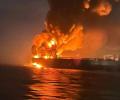
India's foreign policy establishment is adjusting with alacrity in real time -- an extraordinary spectacle in itself, considering the manifest reluctance to indulge in public diplomacy critical of American moves, observes Ambassador M K Bhadrakumar.

Indian benchmark indices, Sensex and Nifty, experienced declines in early trade due to a significant surge in crude oil prices, exacerbated by escalating tensions in the West Asia. Track how Sensex, Nifty fared on July 23.

It is an unusual choice to depute a retired general for the funeral of a revered religious figure but a thoughtful one in an attempt to inject verve into the bilateral relationship and restore the equilibrium in India's West Asian policies, notes Ambassador M K Bhadrakumar.
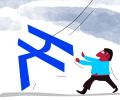
The Indian rupee depreciated by 52 paise to settle at 93.35 against the US dollar, driven by failed US-Iran peace talks, surging crude oil prices due to a potential US blockade of Iranian ports, and a global flight to the greenback. This geopolitical uncertainty is also leading to foreign capital withdrawal from domestic equities.

India's crude oil imports from Russia reached a record high of approximately 2.73 million barrels per day (mbpd) in June, driven by discounts of $2-5 a barrel. This surge comes as the West Asia crisis disrupted supplies from traditional sources and China reduced its own purchases, leading Russia to offer more favourable terms to India.

Prime Minister Narendra Modi, Union ministers and leaders of the National Democratic Alliance allies on Tuesday attended the ruling coalition's weekly meeting of parliamentarians, where the absence of three Nationalist Citizens Party of India (NCPI) MPs stood out amid signs of differences within the 20-member group of Trinamool Congress rebels over its association with the alliance.

India has removed a key regulatory hurdle, allowing exporters to receive payments in Indian currency while retaining incentives under the country's foreign trade policy, a move aimed at promoting wider use of the rupee in international trade.

Subedar Hokato Sema lost his leg in a mine blast on the Line of Control. Today he is a champion para shot-putter and among the most decorated para soldier-athletes.

US President Donald Trump has lauded a newly announced peace deal between the United States and Iran, predicting it will bring "peace and security" to West Asia and facilitate the reopening of the strategically vital Strait of Hormuz.

'Historically, India has depended on the Middle Eastern Gulf for nearly 90 per cent of its LPG imports. Shifting to alternative suppliers is not something that can happen quickly.'

Sagiv Steinberg, CEO of the Jerusalem Center for Security and Foreign Affairs (JCFA), described the recent US-Iran peace agreement as a temporary 60-day ceasefire, not a genuine peace deal, suggesting it's timed for the upcoming US midterm elections.

Indian benchmark indices Sensex and Nifty saw gains in early trade, driven by a decline in crude oil prices due to easing geopolitical tensions in West Asia and strong buying interest in the IT sector.

The Asian Weightlifting Championships, originally scheduled for April in Ahmedabad, have been postponed to May due to the ongoing conflict in West Asia, ensuring the safety and participation of all delegations.

Reigning Indian Super League champions East Bengal are set to face Kuwaiti league runners-up Al Arabi SC in a critical AFC Champions League Two preliminary-stage knockout fixture. The single-leg qualifier will determine a spot in the group stage, with East Bengal navigating squad challenges under new coach Antonio Lopez Habas.
Indian equity benchmark indices, Sensex and Nifty, tumbled nearly 2 per cent for the fourth consecutive session, driven by elevated crude oil prices, escalating US-Iran tensions, unabated foreign fund outflows, and a depreciating rupee.
Indian equity benchmark indices, Sensex and Nifty, tumbled nearly 2 per cent for the fourth consecutive session, driven by elevated crude oil prices, escalating US-Iran tensions, unabated foreign fund outflows, and a depreciating rupee.

India's EV ecosystem is growing, but remains too underdeveloped to cushion a major oil supply shock.

Indian equity benchmark indices Sensex and Nifty rallied in early trade, driven by reports of a second round of talks between the US and Iran, which are fostering hopes for a resolution to the West Asia conflict, coupled with Brent crude oil prices trading below the USD 100 per barrel mark.

Indian stock markets experienced a significant sell-off, with the Sensex tumbling over 1,300 points, driven by escalating crude oil prices due to US-Iran tensions and Prime Minister Narendra Modi's call for austerity measures, which amplified investor concerns about India's economic outlook.

Indian stock market indices Sensex and Nifty experienced a decline in early trade due to surging crude oil prices and ongoing geopolitical uncertainty in West Asia. Foreign fund outflows further contributed to the negative sentiment.

India bought 1.87 million barrels of Russian oil per day in May so far, meeting approximately 40 per cent of its oil imports.

India's mergers and acquisitions (M&A) market is projected to maintain an annual run-rate of approximately $200 billion, evenly split between domestic, inbound, and outbound transactions, despite global geopolitical turbulence, according to Rajesh Singhi, global co-head, M&A Advisory, Standard Chartered Bank.

Pakistan Prime Minister Shehbaz Sharif on Thursday signed the historic peace deal between the United States and Iran as a guarantor; the agreement will see the immediate reopening of the Strait of Hormuz and the lifting of the US naval blockade.
Indian stock market benchmark indices Sensex and Nifty experienced a significant drop in early trade due to rising crude oil prices, bearish global market trends, and continuous foreign fund outflows.

'India should hold several high-level chess tournaments that would attract the world's top players so that the country will have a say in the game.'

The Ministry of External Affairs (MEA) has stated that India is closely monitoring developments in West Asia, addressing topics ranging from ceasefire efforts to maritime security and the safe return of Indian nationals. The MEA also addressed the UN Climate Change Conference and the delimitation bill.

Indian companies, however, are now paying a premium of $6-$7 a barrel for Russian oil, compared with discounts of $8-$10 a barrel before the start of the conflict.

The Centre on Monday informed the Supreme Court that the Central Board of Secondary Examination has come up with a new policy for the evaluation of private students, who were affected by the cancellation of Class XII board examination in Gulf countries due to the recent Iran-US war.
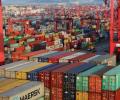
India's exports recorded a 13.78 per cent increase to USD 43.56 billion in April, marking the highest monthly outbound shipments in over four years, primarily driven by petroleum products. However, the trade deficit widened to a three-month high of USD 28.38 billion due to a 10 per cent rise in imports.

Indian benchmark indices Sensex and Nifty continued their upward trend for a second consecutive day, with the Sensex gaining over 800 points, driven by strong performances from heavyweights like Reliance Industries, ICICI Bank, and HDFC Bank, alongside positive cues from easing crude oil prices and robust IT sector earnings.

Dabur India's stock has fallen over 17 per cent since the start of the Iran war, driven by concerns over a weak monsoon, the West Asian crisis, and rising input costs, which are expected to impact the company's revenues and margins, particularly affecting its significant rural sales and international markets.

The Nifty and Sensex outperformed Asian peers in South Korea, Japan, Taiwan and China.

Indian stock market indices closed on a mixed note, with the Sensex gaining 374 points driven by buying in Reliance Industries and ICICI Bank, while the Nifty remained flat. This divergence is attributed to a new Closing Auction Session (CAS) mechanism introduced by stock exchanges, impacting market liquidity and price discovery.
The Reserve Bank of India (RBI) maintained its key policy rates for the fourth consecutive time, keeping the repo rate at 5.25 per cent, while the benchmark BSE Sensex closed 152 points higher in a volatile session, recovering from an intraday dip.

Despite a population of 1.45 billion, India's football team is ranked a lowly 138th in the world and failed to qualify for next year's Asian Cup, highlighting deep-rooted systemic issues and a failure to implement reforms that keep the World Cup dream distant for fans.

Indian benchmark stock indices, Sensex and Nifty, closed nearly 1 per cent lower following the collapse of US-Iran negotiations, which heightened concerns of a prolonged conflict in West Asia and drove crude oil prices sharply higher.

Benchmark indices tumbled about 2 per cent on Friday, capping one of the most turbulent weeks for domestic equities as investors fretted that the West Asian conflict could drag on for weeks or even months.

While the West Asia conflict has led to a drop in patient footfalls, hospitals are seeing higher realisations as international patients increasingly travel for complex, high-end procedures.

Asian Development Bank (ADB) on Friday warned that India's limited crude oil reserves of about 100 million barrels - sufficient for only 40-45 days of consumption - leave the country particularly vulnerable to supply disruptions through the Strait of Hormuz amid the ongoing war in West Asia.
